
When AI Changes Work, Singapore's Next Challenge Is Decision Quality
AI can make work faster, cheaper and more productive. But as intelligence becomes easier to generate, the quality of organisational decisions becomes even more important.
Artificial intelligence is changing work.
Tasks that once required hours can increasingly be completed in minutes.
Research can be accelerated.
Documents can be drafted.
Information can be summarised.
Analysis can be generated.
Software can be written.
Workflows can be automated.
And increasingly capable AI agents can move beyond generating outputs to taking actions.
For Singapore, this creates enormous opportunity.
A relatively small workforce can potentially produce considerably more.
Businesses can operate with greater productivity.
Professionals can work with capabilities that were once available only to much larger teams.
But there is another consequence of making intelligence cheaper and more abundant.
When producing analysis becomes easier, deciding what should actually be done becomes more important.
Singapore's next AI challenge may therefore not be productivity alone.
It may be decision quality.
AI Changes More Than Tasks
Much of the discussion about AI and work focuses on tasks.
Which jobs will disappear?
Which tasks will be automated?
Which employees will become more productive?
Which new skills will workers need?
These are important questions.
But organisations do not exist simply to perform tasks.
They perform tasks in pursuit of outcomes.
And between information and outcomes sits something fundamental:
Decisions.
Should we approve this customer?
Should we invest?
Should we hire?
Which supplier should we select?
What price should we offer?
Where should scarce capacity go?
Which risk should we accept?
Which patient should receive priority?
What should we manufacture?
Tasks provide the information and execution surrounding these questions.
But ultimately, someone has to determine:
What should we do?
Historically, intelligence was expensive.
Producing a market analysis required people.
Reviewing hundreds of documents required people.
Creating scenarios required time.
Finding patterns across large amounts of information required specialised systems.
AI changes that economics.
An organisation can increasingly generate:
more analysis
more recommendations
more forecasts
more scenarios
more interpretations
at dramatically lower marginal cost.
That is valuable.
But it also changes where scarcity moves.
If every executive can generate ten analyses instead of one, the scarce resource is no longer necessarily analysis.
It becomes the ability to determine:
which analysis matters
which objective has priority
which constraint cannot be violated
which trade-off is acceptable
which recommendation should actually be acted upon
In other words:
As intelligence becomes abundant, judgement becomes more valuable.
Generative AI is extraordinarily good at producing answers.
Ask:
How should we increase sales?
and an AI system can generate strategies.
Ask:
Should we increase inventory?
and it can analyse arguments for and against.
Ask:
Which market should we enter?
and it can compare alternatives.
Those answers can be useful.
But an organisational decision requires something more.
Suppose an organisation asks:
Should we enter Market A or Market B?
The decision may depend on:
available capital
strategic objectives
regulatory requirements
existing capabilities
competitive position
risk appetite
time horizon
management capacity
alternative uses of resources
The AI can contribute intelligence.
But the organisation must determine how those realities should be evaluated against one another.
An answer describes or recommends. A decision commits the organisation to a course of action under real constraints and consequences.
That distinction becomes increasingly important as AI becomes part of everyday work.
AI reduces friction.
That is one of its greatest advantages.
But some organisational friction historically existed because people had to think.
A proposal took time to prepare.
Someone questioned the assumptions.
Finance challenged the economics.
Risk raised an objection.
Operations identified a constraint.
Management debated the trade-off.
Not all of this friction was productive.
AI should eliminate unnecessary work.
But organisations need to distinguish between:
friction caused by inefficient work
and
friction caused by necessary judgement.
If both are removed indiscriminately, the organisation may become faster without necessarily becoming better at deciding.
Imagine an organisation uses AI to reduce the time required to evaluate a commercial opportunity from four hours to thirty minutes.
That is a clear productivity gain.
But suppose the resulting decisions gradually produce:
lower margins
more exceptions
greater risk
poorer customer selection
less strategic consistency
Was the AI implementation successful?
If we measure only productivity, perhaps.
If we measure organisational outcomes, the answer may be different.
This creates an important distinction for AI transformation:
How efficiently was the work performed?
is not the same question as:
How good was the resulting decision?
Organisations increasingly need to measure both.
Decision quality is not simply whether the outcome turned out well.
A good decision can sometimes produce a bad outcome because uncertainty exists.
A poor decision can occasionally produce a good outcome through luck.
Decision quality therefore also concerns how the decision was made.
Was the relevant reality understood?
Were the right alternatives considered?
Were material constraints recognised?
Were assumptions visible?
Were policies followed?
Were trade-offs intentional?
Was appropriate evidence used?
Did the right person have authority?
Could the organisation explain why the decision was reached?
And when circumstances changed, could the decision change appropriately?
These questions become increasingly important when AI participates in the process.
Large Language Models are powerful because they model patterns in language.
They can interpret enormous amounts of text and generate highly plausible responses.
But organisations do not operate only in language.
They operate in grounded reality.
Customers exist.
Money moves.
Inventory runs out.
Employees have authority.
Contracts create obligations.
Factories have capacity.
Patients have clinical needs.
Suppliers are delayed.
Policies impose constraints.
A language model can describe these realities.
But consequential decisions depend on the realities themselves and their relationships.
This is why organisations should be cautious about allowing the ability to generate a convincing explanation to become a substitute for an explicit model of the decision.
Every important recurring organisational decision has an underlying structure, whether the organisation has documented it or not.
There is:
a situation
an objective
a set of alternatives
constraints
evidence
policies
trade-offs
authority
Often, this structure exists implicitly.
It lives in experienced employees.
Policies.
Spreadsheets.
Meetings.
Systems.
Standard operating procedures.
And increasingly, prompts.
That may have been manageable when humans performed most of the reasoning.
It becomes increasingly fragile when hundreds of AI systems and agents begin participating in organisational decisions.
The organisation therefore needs something independent of the individual AI model:
its own Enterprise Decision Model.
Today's most capable AI model will not necessarily be tomorrow's.
Organisations will change providers.
Models will improve.
Costs will change.
Different functions may use different AI systems.
Agents may use multiple models simultaneously.
That raises a fundamental question:
If an organisation changes its underlying LLM, should its decisions change too?
The answer should not be accidental.
The organisation's:
objectives
constraints
policies
risk appetite
priorities
authority
acceptable trade-offs
belong to the organisation.
They should not simply be implicit properties of whichever AI model happens to be generating the recommendation.
AI intelligence can change. The organisation's model of how it decides should remain under organisational control.
Singapore has always competed through capability.
A small domestic market and workforce make productivity particularly important.
AI can amplify that advantage.
But Singapore's economic strength also depends on something else:
Trust.
Trust in financial institutions.
Trust in professional services.
Trust in regulation.
Trust in infrastructure.
Trust in healthcare.
Trust in businesses and institutions to act competently.
As AI accelerates work, preserving that trust requires more than productive AI.
It requires organisations to remain capable of explaining and governing consequential decisions.
That creates an opportunity for Singapore to think beyond:
AI adoption
toward:
AI-enabled decision quality.
The first stage of enterprise AI adoption often focuses on the individual.
Can this employee work faster?
Can this analyst produce more?
Can this developer code faster?
Can this marketer create more content?
The next stage moves to workflows.
Can AI automate this process?
Can agents execute these tasks?
But eventually the question reaches the organisation itself:
Can we improve how the organisation makes important decisions?
That is a much larger opportunity.
Because organisational advantage does not come merely from producing more work.
It comes from repeatedly making better choices about:
capital
customers
risk
resources
people
operations
strategy
AI can contribute intelligence to all of them.
But intelligence must ultimately be converted into decisions.
Organisations already invest in infrastructure for:
data
cybersecurity
finance
operations
governance
AI
As AI becomes more deeply embedded in work, the way organisations make consequential decisions may itself need to become explicit infrastructure.
Not because every decision should be automated.
And not because human judgement should disappear.
Quite the opposite.
The purpose is to make clear:
where AI contributes intelligence
where organisational rules apply
where constraints must be respected
where trade-offs must be made
where human judgement matters
where authority ultimately sits
That allows humans and AI to participate in the same decision environment without making the organisation's judgement invisible.
This is the problem that DecisionAI is designed to address.
DecisionAI is WorldMind's Enterprise Decision Operating System.
It enables organisations to represent consequential decisions as explicit Enterprise Decision Models grounded in organisational reality.
The model can represent:
what is happening
what the organisation is trying to achieve
what alternatives exist
which constraints apply
what evidence matters
which trade-offs must be considered
who has authority
AI can contribute intelligence.
Humans can contribute judgement.
Enterprise systems can contribute grounded data.
Agents can execute actions.
But the organisation retains an explicit model of how the decision itself should be made.
AI will continue making work faster.
Models will become more capable.
Agents will perform more tasks.
The amount of intelligence available to every organisation will continue increasing.
That is not the end of the transformation.
It changes where value moves.
When everyone has access to powerful AI, competitive advantage increasingly depends on what organisations do with that intelligence.
Which risks they take.
Which opportunities they pursue.
Which resources they allocate.
Which trade-offs they make.
Which decisions they make repeatedly better than others.
Singapore's next AI advantage may therefore depend not only on becoming more productive with AI.
It may depend on becoming better at deciding with AI.
AI can scale intelligence.
The next challenge is scaling decision quality.
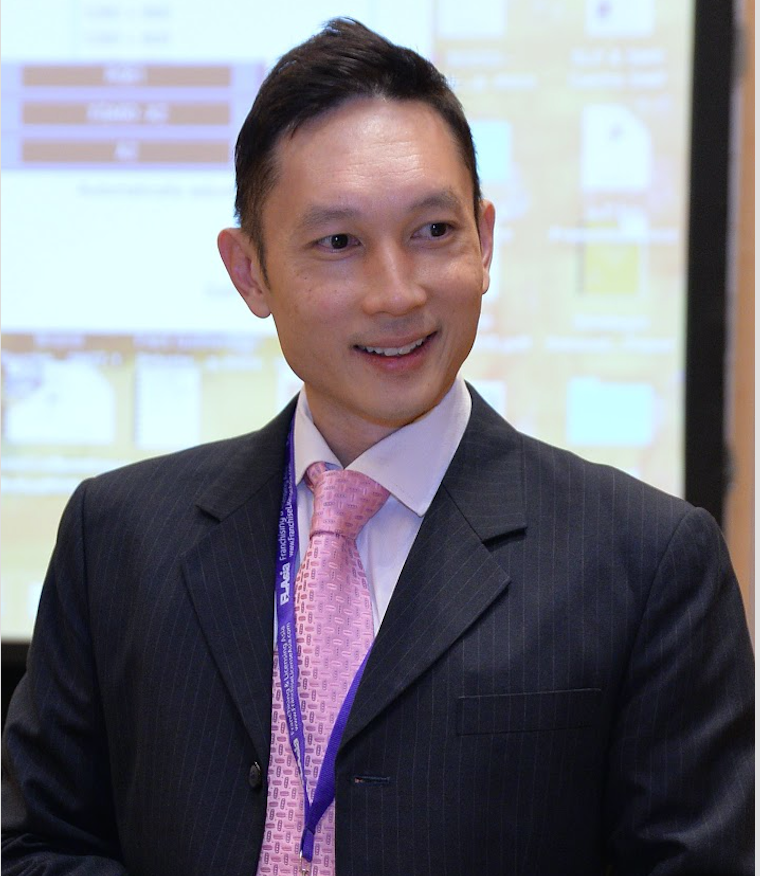
Director of DecisionAI, WorldMind
Original LinkedIn Article →
DecisionAI is WorldMind's Enterprise Decision Operating System.
It enables organisations to turn consequential decisions into explicit Enterprise Decision Models that can be inspected, explained, governed and recomputed as business reality changes.